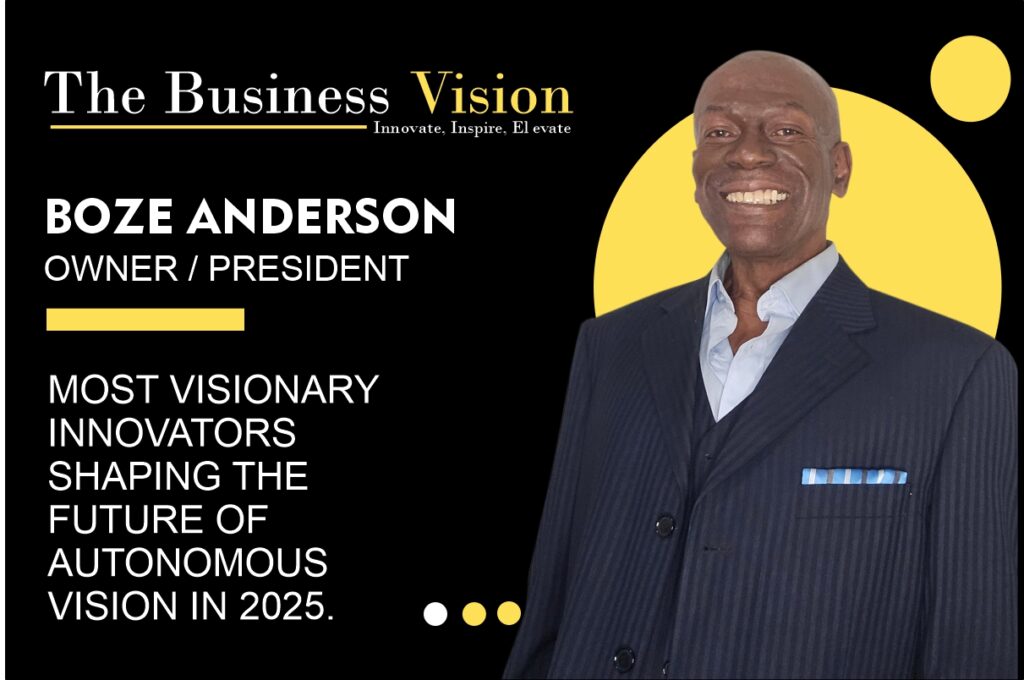
Do you want to know how much of our world we are totally unaware of? The entire microcosm of living organisms, pollens, the finest details of a leaf, and the very structure of the food we consume are all hidden right under our noses. Most of us humans do not realize that we are living our lives in oblivion to the microscopic world, which constitutes the major part of our reality. However, this scenario is going to be reversed with the help of a visionary named Boze Anderson and Micro Eyewear Inc., his company.
It is not just an ordinary tech startup going after the next popular app. Micro Eyewear, led by its owner and president, Boze Anderson, is on a mission to change human perception in a positive way through the provision of what they call “microscopic vision.” Try to imagine wearing glasses, and with just a quick blink, you are able to zoom in on anything and see the amazing hidden details of daily life just as easily as you could with your phone’s camera. This is no longer a tale from fantasy; it is a technology that is already working and will change the way we manage our health and safety, as well as children’s learning in the field of science and the natural world.
From Personal Insight to Global Vision
The journey commenced with a straightforward yet potent realization regarding healthcare. Anderson clarifies, “The majority of people consider health care the best health care is family.” He experienced this through and through when his sister, a nurse, took care of their mother’s hospital stays by making sure all protocols were strictly observed. “My sister, a nurse, whenever my mother had to check into the hospital, checked her in and made sure the procedure was followed. And when she was not there, another family member was.
“This incident uncovered an important difference between the medical world and the general public in terms of health issues understanding. It led to a basic question: what if people could all see and grasp the underlying factors that were affecting their health?
The UCLA Epiphany: From Cellphone Microscopes to Wearable Senses
The breakthrough idea was not only a personal crusade but also the technology of the future during Anderson’s stay at UCLA. The incident that changed everything happened when he saw students doing a good “god” project, but unfortunately, by using very basic materials and cell phones, they were struggling to make low-cost microscopes for third-world countries. Anderson appreciated the aim, but he realized that there was a basic drawback in it. The students would be restricted in their use of this tool, an implement that one would need to pull out, set up, and know how to use. Anderson had a much deeper and more holistic thought that it should be a sense.
Anderson then inquired of himself, “Why not make it a wearable device?” “Why not make the viewing of the minute world as common and easy as that of a room?” This thought changed everything completely. The object was no longer to produce one piece of equipment that was cheaper and easier to use; it was to spot a whole new area of human perception that could be scientifically developed and marketed. Thus, the idea for a device that would not be placed on a bench but on your nose, thereby becoming a part of your vision, was giving birth to what later on was called Autonomous Eyewear/Wearable Microscopes.
Autonomous Eyewear/Wearable Microscopes: The Technology That Makes the Invisible, Visible
What is this extraordinary product, then? Basically, the Autonomous Eyewear is a series of tiny magnifying glasses of the user’s choice that are made specially for homes and daily use. However, Boze Anderson immediately says that this is a huge underestimation. He insists on making a very important distinction that gives his product an edge over the rest of the market: “The eyewear is different from all the other smart glasses because you are seeing all the real things.”
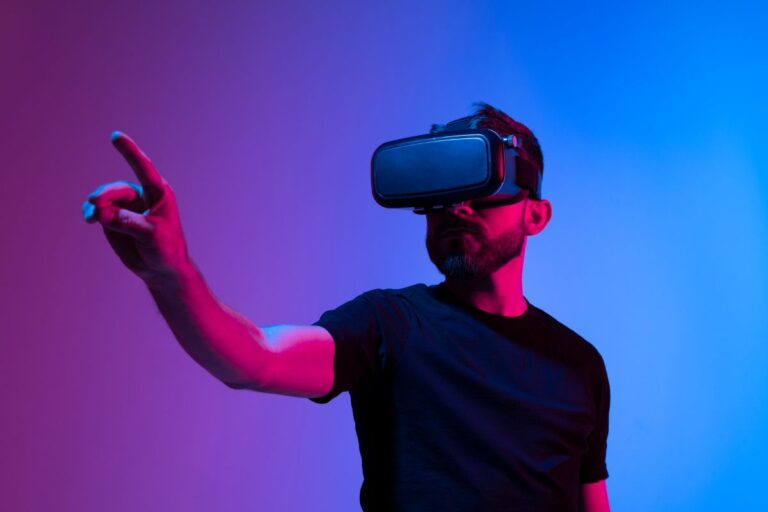
The projection of digital characters into your living room is not an augmented reality. It is, in fact, enhanced reality, which means that there is a real-time optical magnification of the physical world going on. Moreover, it is a revolution in what microscopes can do. Autonomous Eyewear is not like heavy, lab-scale microscopes anymore; it is a head-mounted and auto-focusing device. The user can move, and it will follow the user. The user can look at something new, and it will instantly focus on that.
Anderson admits that the development of the lenses, eye-tracking, and auto-focusing algorithms was very challenging at first and took a long time to get right. However, he is very positive and says, “Lenses can do all sorts of things today.” The outcome is a gadget that appears to be magical: the users can seamlessly change from viewing the world in normal size to viewing it all huddled together over a microscope lens without any time elapsed at all. The company graciously calls itself “the first and only company developing this new 21st-century exponential technology,” and after trying it out, one easily accepts the reason why Anderson refers to it as “more than a product—an evolution!”
Transforming How We Live and Work
The effects of this technology are beyond comprehension. In the field of healthcare, Anderson predicts that “any company, regardless of its size, from one employee to a million, will be able to conduct a variety of tests and receive the results instantly without relying on external laboratories.” For parents, this means “they can test their children’s food and plants, perform tests on a family member using his/her samples, and obtain results immediately.”
However, the impact is still not limited to practical uses only. Anderson imagines this as “the birth of new sustainable markets” where “the wearable microscopes with their microscopic vision will break open the micro- and nano-industries and turn them into mass commercial markets.” He is currently noticing “the recent innovations. We have been utilizing AI along with microscopic vision to create job opportunities in the micro and nano industries and even “training a workforce for space.”
A Universal Vision
What makes Anderson’s approach unique is his philosophical foundation. “My thoughts on diversity, equity, and inclusion. We use the universe’s blueprint to design products to help all humanity. And the universe before me, universalization mindset.” This isn’t just corporate rhetoric—it’s built into the company’s DNA.
“All our products and services are being designed to create a universal culture and space-age lifestyle,” he explains. “You’ll be able to use our products on earth and anywhere man goes in the universe.” This cosmic perspective informs everything from product design to accessibility.
Anderson is particularly focused on making this technology available to everyone. He predicts that “the advancement in lens technology and contact lenses along with improved eye care will continue to microscopic vision. And make the eyewear more easily affordable, and some even free.”
The Bigger Picture
For Anderson, this is about much more than just technology. “What inspired me was people didn’t see much of themselves or the world because of this one-dimensional limited vision.” He sees AI and software-driven optics as fundamentally “transforming human interaction with their environment. They can take a more scientific perspective and approach to life.”
The company’s mission is clear: “Micro Eyewear Inc. is disrupting traditional vision technology by advancing our vision off the seeing eye charts. We want to, for the first time, visually connect the masses to micro- and nano-space.” Anderson emphasizes that “R&D will play an important role for us. We are connected to micro- and nano-space in every way except visually.”
He uses a powerful analogy to explain the vision: “People use mobile devices to visually connect to cyberspace. We want people to use wearable microscopes to visually connect to micro- and nano-space.”
Looking Ahead
In relation to the challenges, Anderson gives guidance that is indicative of his work nature: “The intangibles in business and life will be the most difficult to ratify properly with your skills. That’s what everyone has to face. The invisible things.”
This highlights the Micro Eyewear Inc. saga—a firm that strives to expose the invisible world to us while dealing with the unseen challenges of innovation and entrepreneurship. Anderson, after all, has kept to his dream of “Autonomous Eyewear/Wearable Microscopes being more than a product—an evolution!” It’s not solely about altering the way we see but rather the whole transformation encompassing viewing, comprehending, and interacting with our environment—from the tiniest microscopic details to the huge cosmic space.